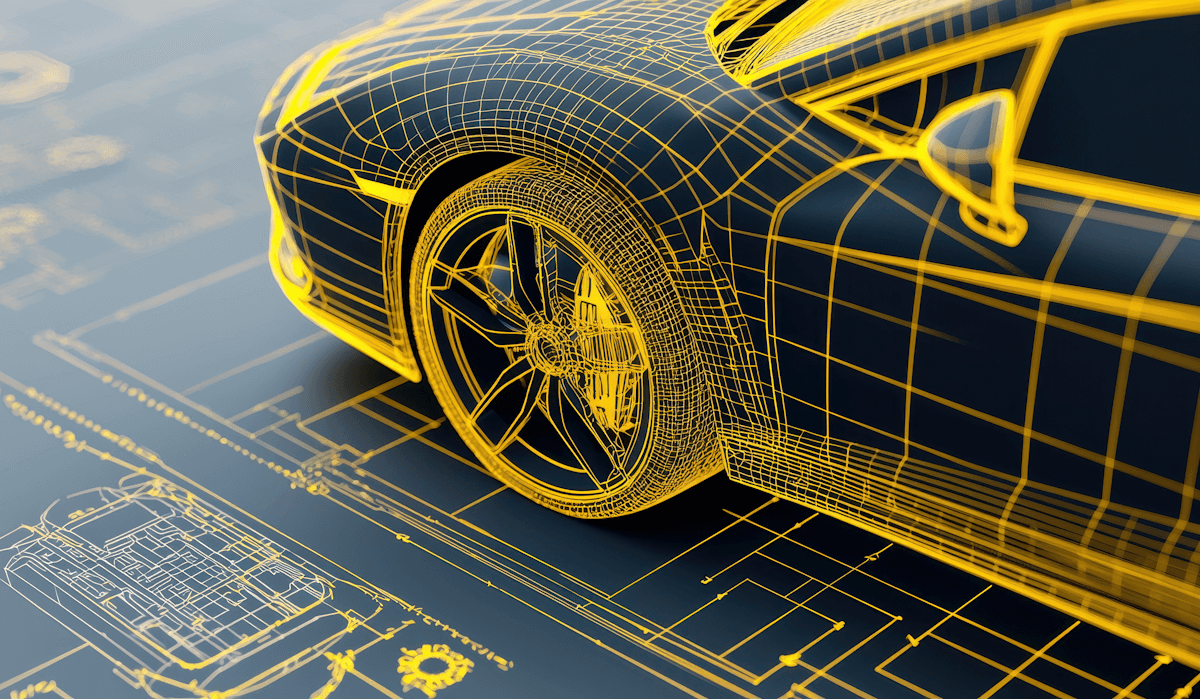
Mobile absorber of kinetic energy when a vehicle hits a stationary or slow-moving truck, used on roads in work zones and during maintenance work

The subject of the project was a TTMA device (mobile absorber of kinetic energy when a vehicle hits a stationary or slow-moving truck, used on roads in work zones and during maintenance work).
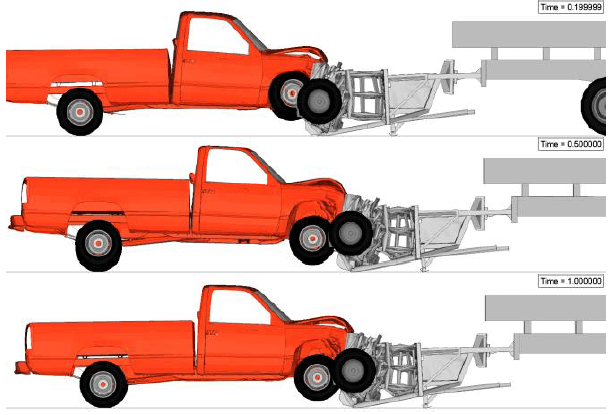
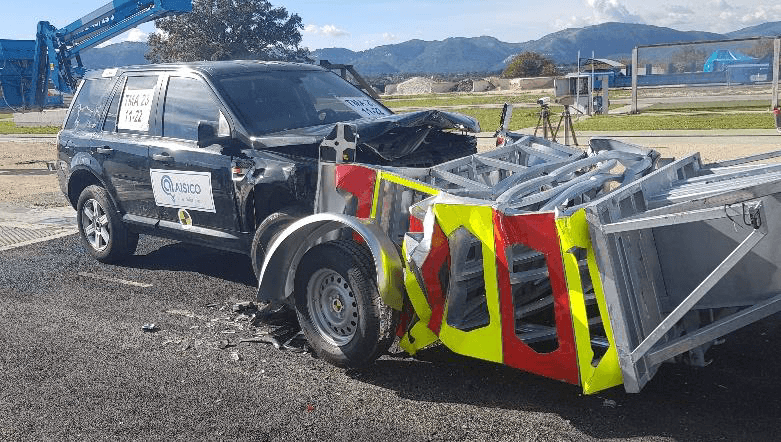
SolidWorks software was used for the design work. The numerical model of the TTMA was prepared in Altair HyperMesh. The calculations were carried out in LS-Dyna.
A prototype of the TTMA mobile absorber, meeting the requirements of European standard CEN/TS 16786:2018 for an impact speed of 100 km/h (confirmed by experimental tests).
The past few years have been challenging for the European automotive sector – production declines, supply chain disruptions, and intensifying competition from Asian manufacturers have forced many companies to downsize. Now, as the market slowly begins to recover, businesses face a new challenge: how to quickly restore their delivery capacity when skilled specialists are in short supply?
Read moreModern automotive lighting is no longer limited to a purely functional role. LED logos, illuminated grilles, and dynamic light animations are becoming a new communication language for car brands. How does the combination of design and technology turn light into a recognizable brand signature?
Read moreA few decades ago, securing a car meant a sturdy lock and an alarm. Today, it means defending a rolling, always-connected computing platform – equipped with dozens of Electronic Control Units (ECUs), multiple in-vehicle networks, and high-speed links to the cloud.
Read more