Rolling stock modernisation is becoming an increasingly attractive alternative to purchasing new vehicles, especially with rising costs, budget constraints and the need to operate in line with sustainable development principles. When does modernisation make sense and how can it be carried out effectively?
Faced with rising costs for new rolling stock, tight investment budgets and increasingly stringent environmental requirements, rail operators are increasingly opting to modernise their existing rolling stock. Thanks to modern technologies and advanced design tools, it is now possible to refresh decades-old designs in a way that meets the realities of the 21st century – at a significantly lower cost than purchasing new vehicles.
In this article, we discuss:
Rolling stock modernisation is more than just repair – it is a comprehensive overhaul of a railway vehicle that goes beyond mere restoration to improve and expand its functionality, safety, comfort and compliance with current standards. It includes, among other things, the reconstruction of the vehicle’s front end, the modernisation of the driver’s cab, new cladding materials (e.g. aluminium, composites), as well as changes to the interior – from the seating layout to air conditioning, passenger information and Wi-Fi systems. The drive, electrical and safety systems are also often upgraded to ensure that the vehicle meets the most important current TSI, EN and fire safety standards. The result? Longer service life, better energy efficiency and rolling stock adapted to modern expectations.
Rolling stock modernisation is a viable alternative to purchasing new vehicles. It allows existing units to be upgraded at 30% to 50% of the price of a new train, reducing the delivery time to about a dozen months. This is particularly cost-effective when the basic structure of the vehicle, i.e. the frame, load-bearing elements and mechanical components, remains in good condition. The modernisation process usually covers areas such as the drive system, driver’s cab, passenger interior, on-board installations and safety systems. It is estimated that it can extend the service life of a vehicle by up to 15 to 20 years.
The benefits of rolling stock modernisation are multifaceted. They include lower investment costs, simplified vehicle approval, improved energy efficiency (e.g. thanks to new drives and LED lighting) and significantly increased passenger comfort. What is more, modernised rolling stock also improves safety. This is due to, among other things, the installation of advanced monitoring systems, better protection of the driver’s cab in the event of collisions and compliance with current fire safety requirements.
Rolling stock modernisation is not just about changing the appearance or installing new systems. It is also a complex technical process that requires the precise adaptation of new solutions to the existing vehicle structure. The key challenges of rolling stock modernisation are:
Modernisation offers great opportunities, but it has its own specific characteristics and requires precision, experience and a skilful combination of modernity and the limitations of the existing platform.
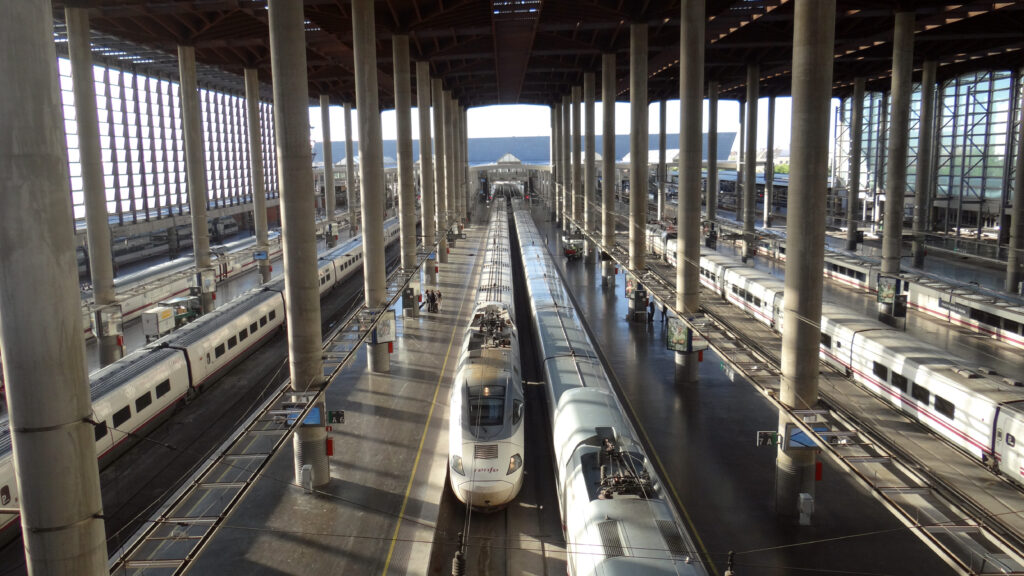
Rolling stock modernisation is a multi-stage process that requires precise planning, engineering know-how and close cooperation between design, technology and production teams. It consists of several stages:
The modernisation of rolling stock is a dynamic process that evolves with technological developments and growing market requirements. We are currently observing several key trends:
Today, rolling stock modernisation is not only a way to extend the life of vehicles, but above all a tool for building modern, safe and competitive rail transport in a shorter time. It allows for the incorporation of current technical standards, increased passenger comfort, reduced energy consumption and shorter vehicle implementation times, while significantly reducing costs compared to the purchase of new units.
Modernisation is therefore not just a technical refresh of the vehicle, but a well-thought-out, strategic investment that allows for a flexible and economical response to market needs and improves the image of the carrier without the need to replace the entire fleet.
At Endego, we support rolling stock manufacturers in a wide range of rail vehicle design and optimisation services, from the front-end modernisation and strength analyses to the integration of modern systems and preparation of certification documentation.
📩 Contact us to discuss your project.
The past few years have been challenging for the European automotive sector – production declines, supply chain disruptions, and intensifying competition from Asian manufacturers have forced many companies to downsize. Now, as the market slowly begins to recover, businesses face a new challenge: how to quickly restore their delivery capacity when skilled specialists are in short supply?
Read moreModern automotive lighting is no longer limited to a purely functional role. LED logos, illuminated grilles, and dynamic light animations are becoming a new communication language for car brands. How does the combination of design and technology turn light into a recognizable brand signature?
Read moreA few decades ago, securing a car meant a sturdy lock and an alarm. Today, it means defending a rolling, always-connected computing platform – equipped with dozens of Electronic Control Units (ECUs), multiple in-vehicle networks, and high-speed links to the cloud.
Read more